
In a city increasingly shaped by conversations around tech and innovation, I attended a Q&A with Peter Kyle, Secretary of State for Science, Innovation and Technology, on May 8th in Brighton. The event was hosted by Brighton AI and Silicon Brighton, two local organisations dedicated to fostering tech talent, digital innovation, and community engagement. Kyle arrived not to lecture, but to think aloud, with clarity, candour, and the occasional critique of institutional sluggishness.
Peter Kyle, who took on the cabinet role in July 2024, isn’t your typical political technocrat. He speaks with the intensity of someone who remembers the sharp edge of exclusion. Diagnosed with severe dyslexia, Kyle didn’t follow a straight path into public life. In fact, he was rejected by Sussex University three times before being accepted. Initially, he was rejected due to a lack of qualifications. After returning to his secondary school at age 25 to obtain the necessary A-levels, he applied again and was rejected a second time. On his third attempt, he was finally admitted, reportedly after Dame Anita Roddick intervened by threatening to return her honorary degree unless he was accepted. This twist isn’t just a biographical footnote, it underpins his insistence that technology and AI should not be a playground for the privileged few.
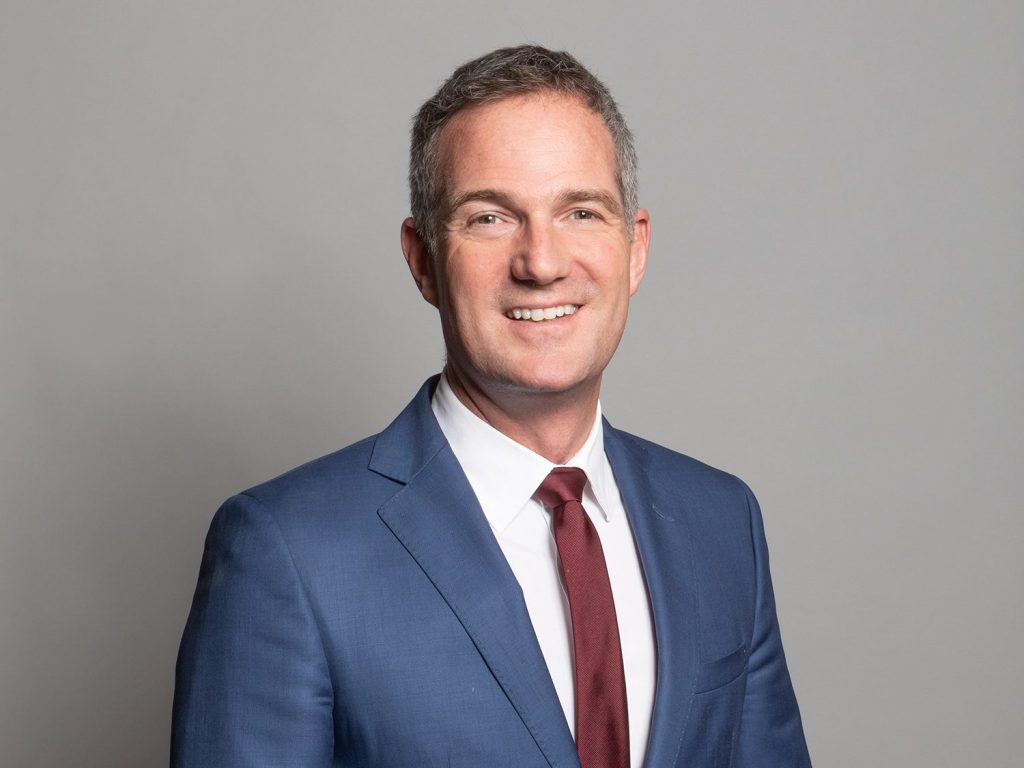
Picture of Peter Kyle ©House of Commons
Brighton and Beyond: AI for the Many
Brighton, as Kyle puts it, is uniquely positioned: two universities, a community of thinkers and tinkerers, and a sense of place that fosters experimentation. He calls this mix “gold dust.” And yet, something’s missing. Kyle hopes AI and technology can tighten those threads.
What gets him animated is the promise of AI to erode barriers, especially those faced by people who, like him, didn’t always fit the mould. “You’re going to have people who have great ideas…but don’t have the programming skills,” he says. AI, for him, is not just a tool; it’s a translator between genius and accessibility.
He’s impatient with the status quo. “Schools have no idea what the job trends are for the five square miles around the actual school itself,” he says. The frustration underneath is palpable. If we’re not aligning education with economic reality, we’re preparing students for a labour market that no longer exists. The world, he warns, is on the cusp of transformation: “The world is going to absolutely change.”
And then the real question: “Do we want to be a country that buys off the shelf from other countries every day, or do we want to be producing this within Britain, within Britain, and being at the cutting edge of it?”
The Future of AI in Government
Kyle doesn’t rhapsodise about the government. Instead, he’s trying to rewire its relationship with innovation. He talks about new tools and systems not with grandiosity, but with the urgency of someone who knows he has the power to change things.
One such tool is Consult, a public engagement platform that he describes as “400 times quicker and 16 times cheaper” than human-led consultations, and less biased, too. “It gives voice to disadvantaged communities,” he says, nodding to its potential to rebalance power.
He also mentions the upcoming gov.uk app, which will include an AI assistant to help users navigate services. And behind the scenes, more than 200 communities have expressed interest in hosting new digital infrastructure.
Kyle’s government, he insists, wants to bring the workforce with it. “We can prepare workforces and we can lead workforces through the transition to digital. We want to create… a better remunerated, rewarding, working environment,” he says. Displacement, he admits, is inevitable. But preparation is key. He points to a new apprenticeship route within the civil service aiming to ensure that by 2030, one in ten jobs are digitally enabled.
Innovation, he suggests, isn’t just about flashy tech, it’s about building systems that adapt in real time. “There is also a risk of not doing any of this stuff,” he warns. His message is clear: inaction isn’t neutral, it’s dangerous.
Even his reference to Trump is less about critique and more about contrast. “When you look at what Dominic Cummings was trying to do, when you look at what Elon Musk and Trump is trying to do… we can do this in a way that has progressive values built into it.” Where others may rush, Britain under a Labour government, Kyle says, can modernise with intention.
AI, Ethics, and the Dystopia That Isn’t Inevitable
Are we heading toward a utopia or a dystopia? Kyle doesn’t pretend to know, but he wants the UK to have a hand on the wheel. “We do have the power as a community, a society and a state to shape how this policy is used and implemented, deployed and consumed.”
Unlike some AI evangelists, he’s cautious without being paranoid. Kyle hasn’t introduced AI-specific legislation yet, but regulators have been tasked with understanding how AI will impact their sectors. The groundwork, he suggests, is underway.
He gets personal again when the conversation turns to education. “I’m severely dyslexic. I’m profoundly dyslexic. And when I see how AI is being used for teaching and learning, it is incredible.” For him, the promise of AI is as much about personal empowerment as societal transformation.
On social media, Kyle is both realist and reformer. He’s quick to note that protections for children are already in motion, with new regulations due out by July. But he also sees hope. “Algorithms are positively understanding our characteristics and helping us through life,” he says. That’s not just political optimism. It’s a provocation: what if our feeds could uplift rather than exploit?
He reflects on a moment when targeted advertising revealed something darker. After searching for a new car, he began receiving persistent ads across platforms. But what stayed with him was the question: what if, instead of showing someone ads for a car they can’t afford, the algorithm recognised signs of suicidal ideation and intervened with support? This, he suggests, is the deeper potential of AI, not just to sell, but to understand and uplift. For Kyle, the future of technology isn’t about fear. It’s about intentional, humane design.
The Story We Tell
As the conversation winds down, Kyle offers an insight: AI, like any powerful tool, reflects our intentions. And for Peter Kyle, intention matters.
If Britain gets this right, if it links its communities, reforms its institutions, and keeps the human stakes at the centre, then maybe, just maybe, we’ll have something more than a technological revolution. We’ll have a story worth telling.

 Andromeda Magazine
Leave a comment